Which version is the original, and how do you know?
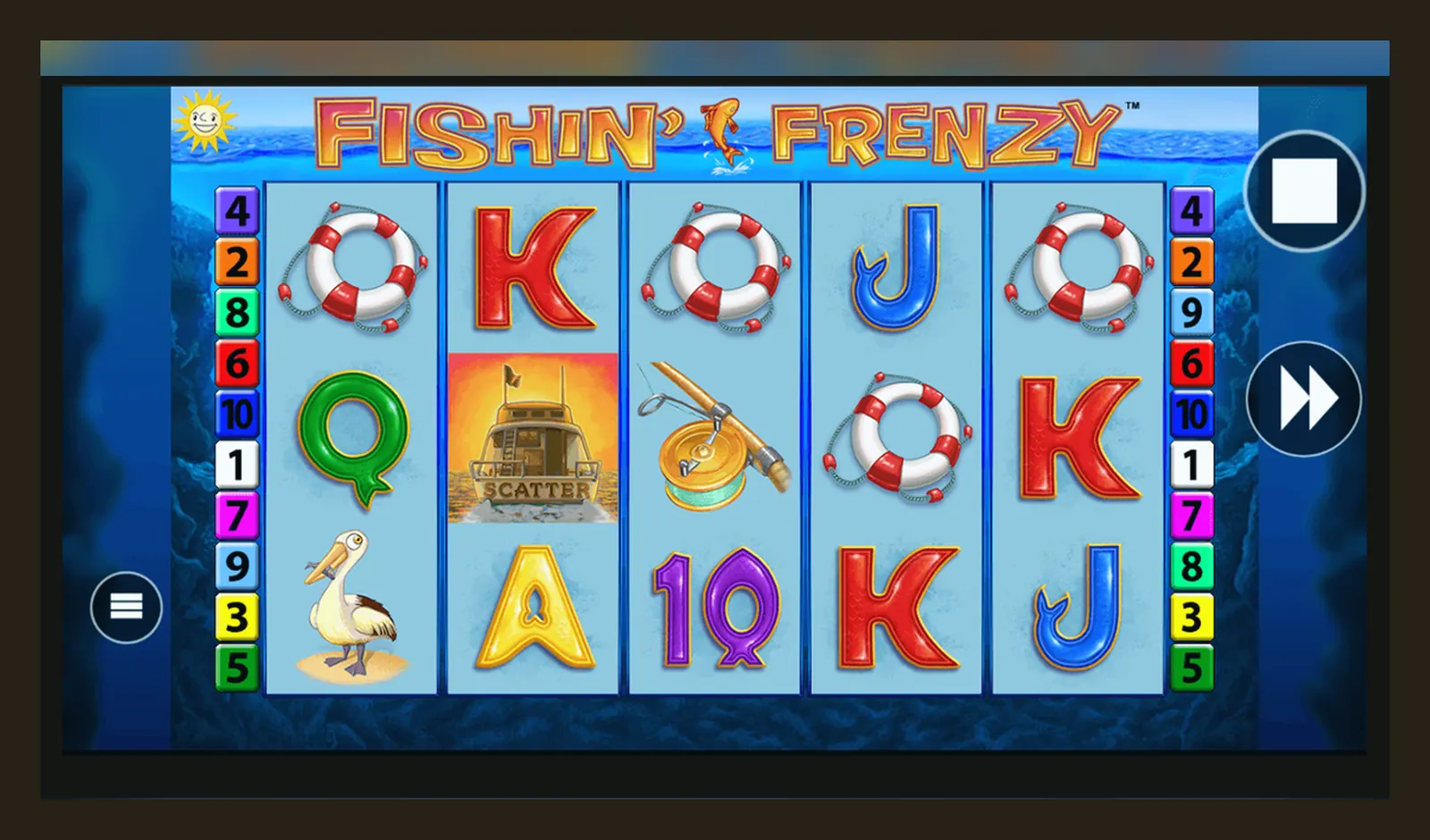
The most common mistake: you search «Fishin' Frenzy», click the first result, and assume it's the Blueprint original from 2014. Half the time it isn't — it's a reskin with the same name, different maths, and no UKGC certification behind it.
Blueprint Gaming owns the trademark and the certified code. Everything else is either a licensed sequel (Megaways, Jackpot King) or an unlicensed clone. This page walks through how the original works, what the paytable actually says, and a ten-second footer check that tells you whether you're on the real thing or a knock-off.
Blueprint made it; testing labs certified it
Blueprint Gaming released Fishin' Frenzy in 2014 under a UK Gambling Commission supplier licence. The game runs on certified RNG — random number generation tested by an accredited lab, usually iTech Labs or Gaming Laboratories International. The certificate number lives in the game's info screen; if it's missing, you're not on a regulated build.
Blueprint is part of the Gauselmann Group, a German gaming-equipment manufacturer that's been around since 1957. The studio holds supplier licences in the UK, Malta, and Gibraltar. Any site that hosts the original needs its own UKGC remote licence — look the operator up in the UKGC public register and match the licence number in the footer. If the site isn't on that list, it's illegal to market to British players, and you have no regulatory comeback if something goes wrong.
The original has spawned twelve sequels: Fishin' Frenzy Megaways, Prize Lines, Jackpot King, Even Bigger Catch, and so on. Those are legitimate Blueprint titles with their own maths models. Unlicensed clones, by contrast, copy the fishing-boat theme and reel layout but run different code — often higher volatility, no certification, and payout percentages you can't verify.
How a round works from the player's seat
You pick a stake between £0.10 and £5.00 per spin — the £5.00 cap is a UKGC rule for all slots, and players aged 18–24 are capped at £2.00. The game has ten fixed paylines across five reels. You press spin, the RNG picks a reel-strip position for each reel, and symbols land. Winning combinations of three or more matching symbols on a payline pay according to the paytable; the fisherman wild substitutes for everything except the scatter.
Three or more scatter symbols — the fishing-boat logo — trigger ten free spins. During free spins, every fish symbol shows a cash value, and every wild that lands collects all visible fish prizes on that spin. That's the entire mechanic: no progressive multipliers, no cascades, no hold-and-respin. The feature ends after ten spins, you return to base game, and the cycle repeats.
The theoretical return to player is 96.12 per cent in most jurisdictions, though some operators run a 94 per cent or 92 per cent version — the RTP is listed in the game's info menu, usually a small «i» icon in the corner. Volatility is medium: you'll see frequent small wins in the base game and longer waits for the feature, but the swings aren't as sharp as a high-volatility Megaways slot.
The real numbers from the tech sheet
The maximum win of 2,500× is modest by modern standards — many 2020s slots offer 10,000× or higher. That cap reflects the game's 2014 design and medium volatility. At a £5.00 stake, the top prize is £12,500; at £0.10, it's £250. The feature triggers roughly once every 156 spins on average, but variance means you might see it twice in fifty spins or not at all in four hundred.
The game has no difficulty levels or player-adjustable settings beyond stake. Some clones advertise «turbo mode» or «buy feature» — the Blueprint original has neither. If you see a bonus-buy button, you're on a different version or a reskin.
Mechanics one by one: what actually happens
- Wild substitution: the fisherman wild replaces all symbols except the scatter. In the base game, it just completes paylines. In free spins, it becomes a collector.
- Scatter trigger: three, four, or five boat scatter symbols award ten free spins regardless of payline position. You cannot retrigger during the feature.
- Fish prizes: fish symbols are dead in the base game — they don't pay on their own. In free spins, each fish displays a cash value between 2× and 20× your total stake (not line bet). The value is randomly assigned when the fish lands.
- Wild collection: during free spins, any wild that appears collects every fish prize visible on the screen at that moment. One wild on reel three might collect five fish for a combined 60× win. Multiple wilds on the same spin collect independently — if two wilds land, each collects all visible fish.
- No multipliers: the feature does not apply a global multiplier. Your total feature win is the sum of collected fish prizes plus any regular payline wins during those ten spins.
The mechanic is simple enough that most players understand it within two feature rounds. The variance comes from how many fish land per spin and whether a wild appears to collect them. A feature with no wilds pays only base-game line wins; a feature with three wilds on high-value fish spins can hit several hundred times stake.
Which clones circulate and how they differ
Unlicensed clones typically keep the fishing-boat theme, the ten-payline grid, and the free-spins scatter, but alter the maths. Common changes: higher volatility, lower RTP (often 92 per cent or below with no disclosure), and inflated maximum-win claims that don't match the actual paytable. Some clones add a bonus-buy feature or cascading reels — mechanics the Blueprint original never had.
| Feature | Blueprint original | Typical clone |
|---|---|---|
| Provider | Blueprint Gaming | Unknown or fake studio name |
| Certification | iTech / GLI certificate in info menu | No certificate or fake badge |
| RTP disclosure | Visible in game info (96.12% / 94% / 92%) | Often missing or vague |
| Max win | 2,500× stake | Claims vary; maths unverified |
| Bonus buy | Not available | Sometimes present |
| UKGC licence | Operator must hold valid remote licence | Site not in UKGC register |
The fastest tell: open the game info or settings menu and look for the Blueprint Gaming logo, the RTP percentage, and a testing-lab certificate number. If any of those are missing, you're probably on a clone. Then check the operator's footer for a UKGC licence number and confirm it in the public register. Unlicensed sites can't legally serve British players, and if they take your money, you have no regulatory protection.
A ten-second check that you're on the original
- Load the game and open the paytable or info screen — usually a small «i» icon in the corner.
- Look for the Blueprint Gaming logo and copyright notice. If it says anything else, or if there's no branding at all, stop.
- Check the RTP: it should be 96.12 per cent, 94 per cent, or 92 per cent, clearly stated. No RTP listed means no certification.
- Look for a testing-lab certificate reference — «Certified by iTech Labs» or similar, with a reference number. Not all info screens show the full certificate, but the lab name should appear.
- Close the game and scroll to the operator's footer. Find the UKGC licence number — it's a legal requirement for any site serving British players.
- Copy that licence number and search the UKGC public register at gamblingcommission.gov.uk. If the operator isn't listed, the site is unlicensed and illegal here.
That sequence takes less than a minute and filters out most clones and dodgy operators. If the game passes all six checks, you're on the certified Blueprint build running through a licensed UK casino. If it fails any step, find a different site.
FAQ
Where does the original run for a player from the UK?
The original runs on any UKGC-licensed operator that carries Blueprint Gaming's portfolio. Look the operator up in the UKGC register and confirm the licence number matches the footer. Most licensed sites offer a demo version for logged-in, age-verified accounts — free play without deposit, though you'll need to register and pass identity checks first. Real-money play requires a deposit via debit card, PayPal, Apple Pay, Open Banking, or paysafecard; credit cards have been banned for gambling in the UK since 2020. Stakes are capped at £5.00 per spin, or £2.00 if you're aged 18–24. Conditions and game availability change; check the operator's game lobby to confirm Fishin' Frenzy is live.
What's the difference between the original and Fishin' Frenzy Megaways?
The original is a ten-payline, five-reel slot with a fixed 2,500× maximum win and medium volatility. Megaways is a six-reel engine with up to 15,625 ways to win, cascading reels, and an unlimited win multiplier during free spins — completely different maths, certified separately. Both are Blueprint titles, both are legitimate, but they play nothing alike. If you want the 2014 classic, make sure the title screen says just «Fishin' Frenzy» with no Megaways, Prize Lines, or Jackpot King suffix.
Why do some versions show 92 per cent RTP instead of 96.12 per cent?
Blueprint supplies the game in multiple RTP configurations, and operators choose which build to run. The 96.12 per cent version is the highest; some sites run 94 per cent or 92 per cent builds, usually to meet internal margin targets or local regulations. The RTP is always disclosed in the game's info menu — if it's not listed, that's a red flag. Lower RTP means a higher house edge over time, so if you have a choice between operators, pick the one running the 96.12 per cent build.
Can I trigger the feature more often by changing my stake?
No. The RNG doesn't care what you bet — the average trigger frequency is one in 156 spins regardless of stake. Variance means you might see the feature sooner or later on any given session, but over thousands of spins, the maths converge to that one-in-156 figure. Raising your stake increases the pound value of each win, not the probability of hitting the feature. Some players believe higher stakes «unlock» better outcomes; that's gambler's fallacy, and the RNG doesn't work that way.